Media bias is a tilt in how stories are chosen, framed or worded, whether or not anyone intends it.
Have a headline to test? Try the Headline Lab.
Headline Lab
Paste any headline below. Headline Lab flags curiosity gaps, loaded words, ALL CAPS and other clickbait tricks, highlights them in the text and suggests a calmer way to say it.
Waiting for a headline
Type or paste a headline to see its score from 0 (straight) to 100 (pure clickbait).
Results appear here once you enter a headline. Nothing leaves your browser.
Types of media bias
Key points for this section.
Researchers who study news coverage generally group media bias into a few recurring forms rather than a single effect. Pew Research Center’s journalism studies describe bias as showing up in which stories get covered at all, not only in how a covered story is worded.
- Selection bias – which stories get covered and which are skipped.
- Framing bias – which angle or cause a story leads with.
- Word-choice bias – which label is used for the same event or group.
- Omission bias – which context or counterpoint is left out.
- Placement bias – how prominently a story is displayed.
These forms often combine: a story can be selected, framed and worded in ways that each add a small tilt, so the combined effect is larger than any single choice.
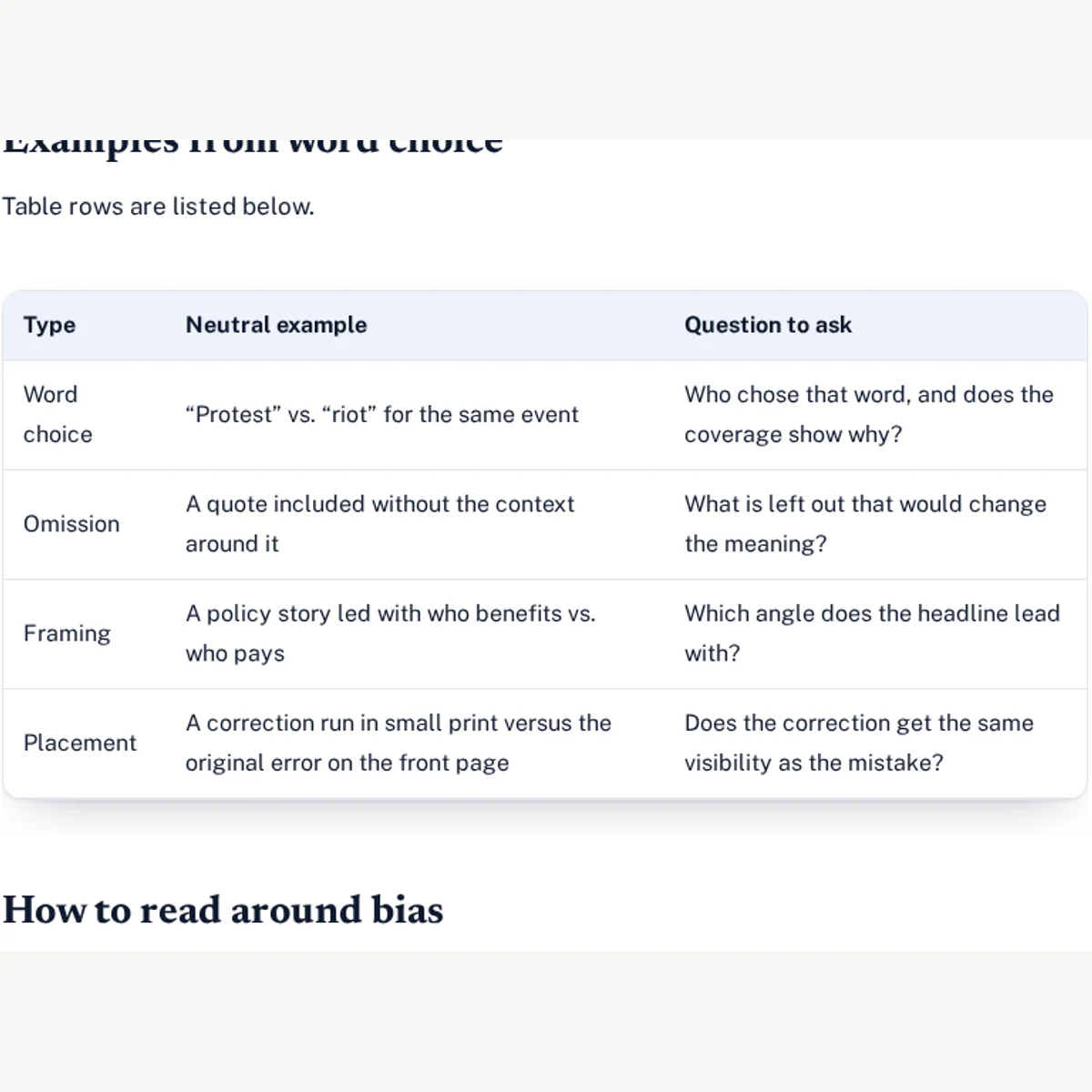
Examples from word choice
Table rows are listed below.
| Type | Neutral example | Question to ask |
|---|---|---|
| Word choice | “Protest” vs. “riot” for the same event | Who chose that word, and does the coverage show why? |
| Omission | A quote included without the context around it | What is left out that would change the meaning? |
| Framing | A policy story led with who benefits vs. who pays | Which angle does the headline lead with? |
| Placement | A correction run in small print versus the original error on the front page | Does the correction get the same visibility as the mistake? |
How to read around bias
Use this as a check, then confirm with the original source.
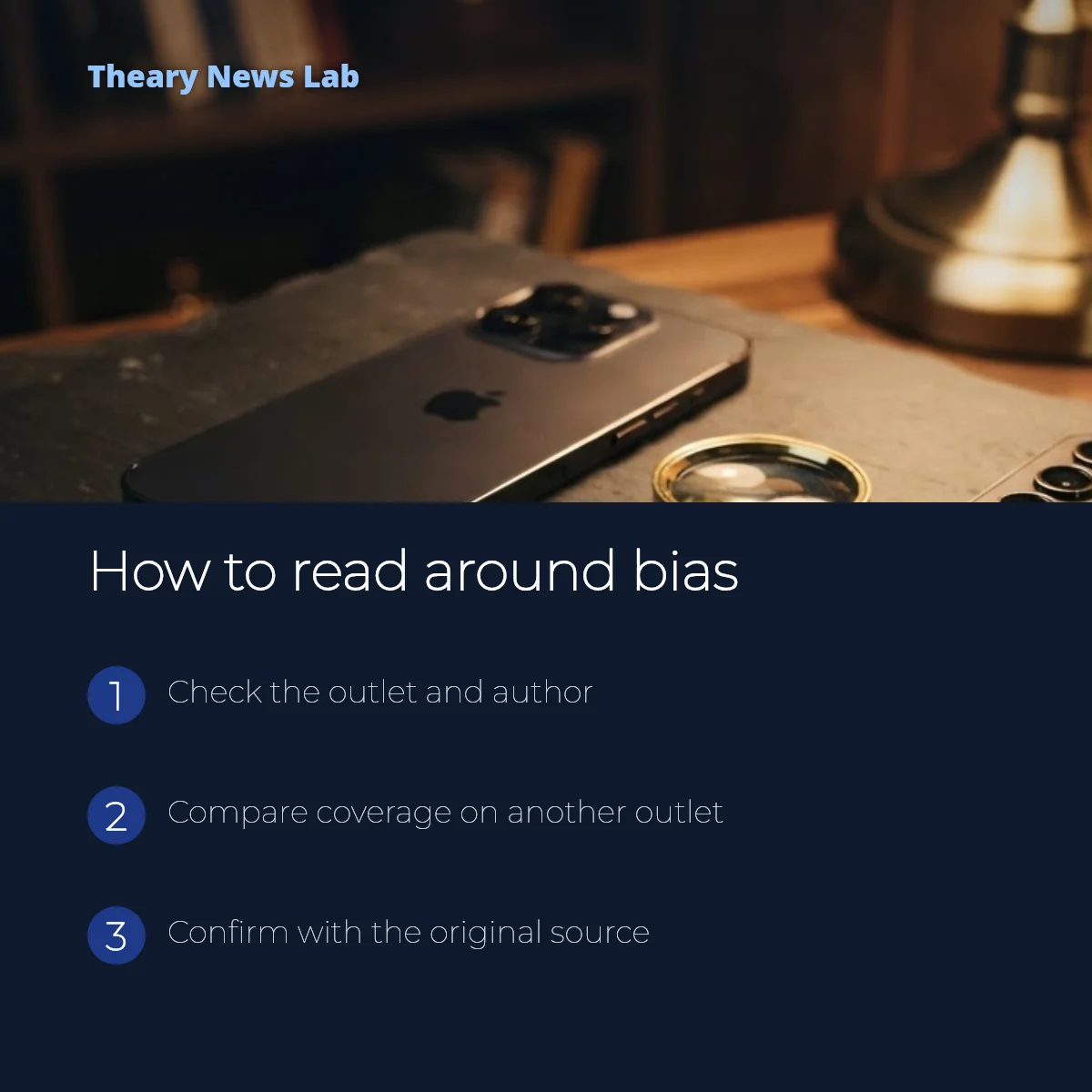
Reading past a single headline is the fastest check: look at the outlet and author, then search for the same event on a second outlet with a different editorial stance. If only one source uses dramatic wording for an otherwise ordinary event, that wording is likely doing the tilting.
- Check the outlet and author before trusting the framing.
- Compare coverage of the same event on a second outlet.
- Open the original source – a press release, court filing or study – before sharing a claim about it.
These checks help but do not prove a story true or false; confirm with the original source.
Theary News Lab’s full guide list continues with the Headline Lab and read meter.
Was this page helpful?
One tap tells us what to explain better.
Thanks for your feedback!