Misinformation is false information shared without intent to deceive; disinformation is false information spread on purpose.
Have a headline to test? Try the Headline Lab.
Headline Lab
Paste any headline below. Headline Lab flags curiosity gaps, loaded words, ALL CAPS and other clickbait tricks, highlights them in the text and suggests a calmer way to say it.
Waiting for a headline
Type or paste a headline to see its score from 0 (straight) to 100 (pure clickbait).
Results appear here once you enter a headline. Nothing leaves your browser.
Common kinds of misinformation
Key points for this section.
Fact-checking organizations such as the International Fact-Checking Network and FactCheck.org publicly document recurring patterns rather than one-off errors.
- Old media reused – a real photo or video from one event presented as another.
- False context – a real quote or clip shown without the context that changes its meaning.
- Fabricated claims – a statement or statistic invented and attributed to a real person or body.
- Manipulated media – an image or video edited to show something that did not happen.
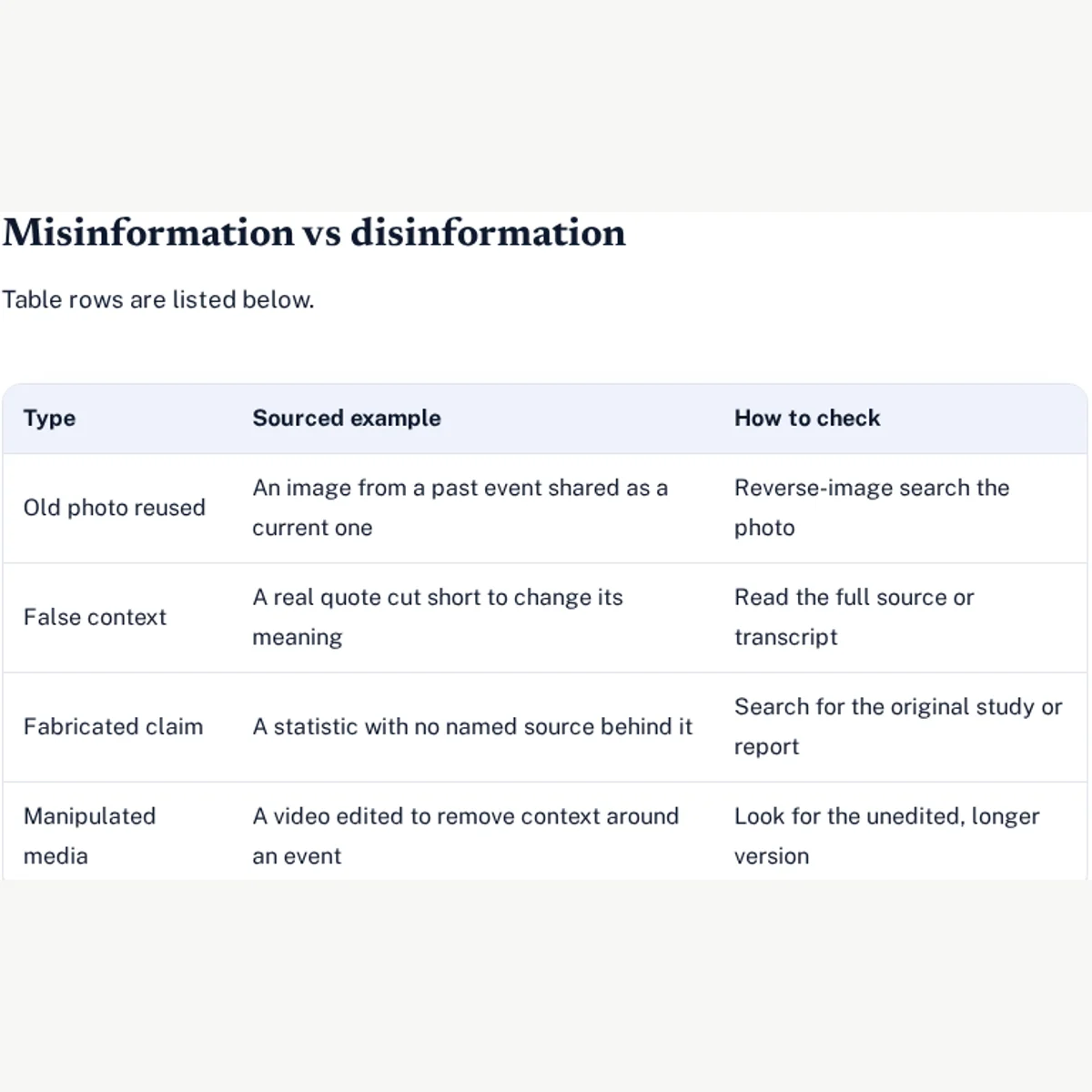
Misinformation vs disinformation
Table rows are listed below.
| Type | Sourced example | How to check |
|---|---|---|
| Old photo reused | An image from a past event shared as a current one | Reverse-image search the photo |
| False context | A real quote cut short to change its meaning | Read the full source or transcript |
| Fabricated claim | A statistic with no named source behind it | Search for the original study or report |
| Manipulated media | A video edited to remove context around an event | Look for the unedited, longer version |
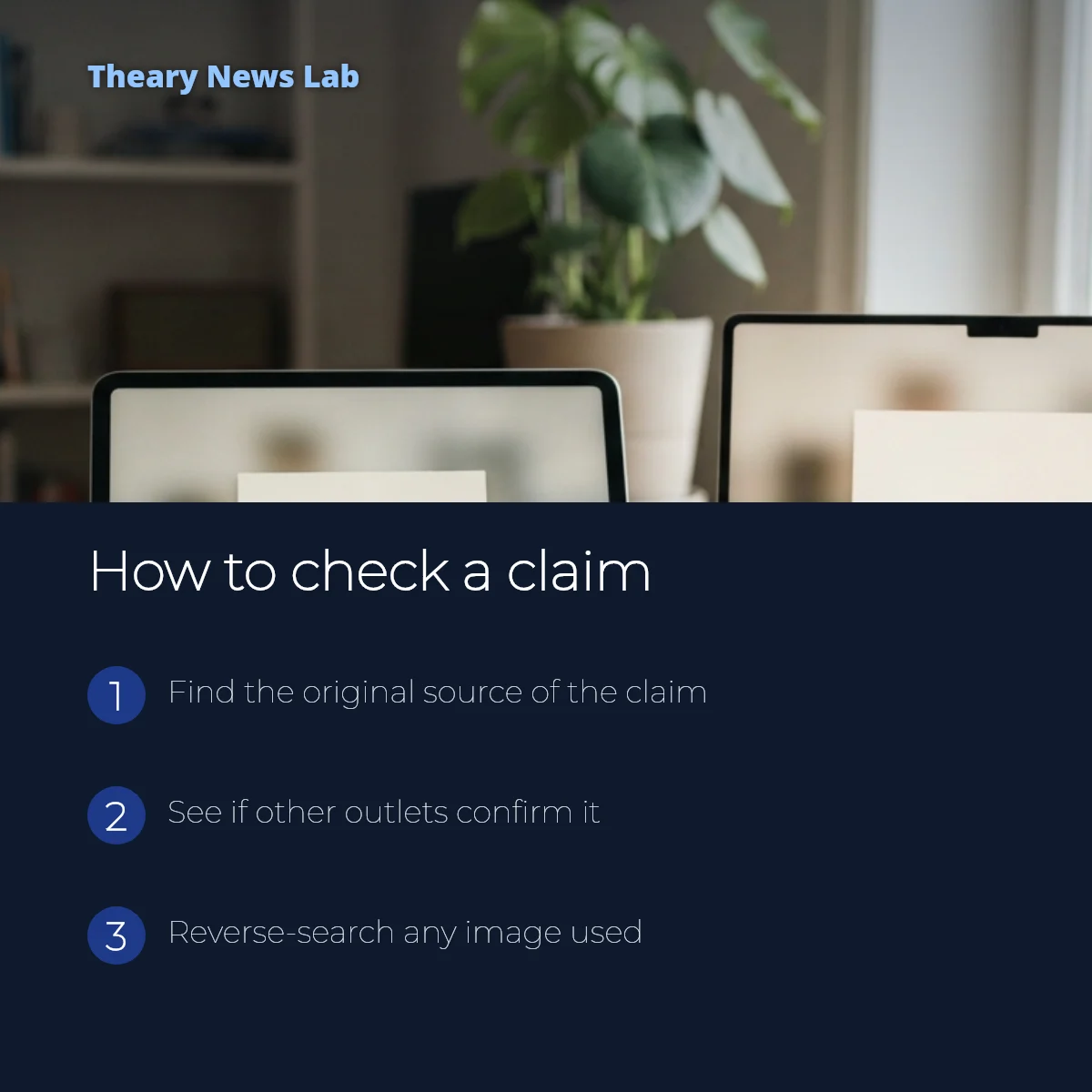
How to check a claim
Use this as a check, then confirm with the original source.
Most misinformation falls apart under one or two checks: tracing a claim back to where it first appeared, and seeing whether an outlet with a different editorial stance reports the same thing. A reverse image search on a photo often reveals when and where it was actually taken.
These checks help but do not prove a story true or false; confirm with the original source.
Theary News Lab runs the Headline Lab and read meter alongside this guide.
Was this page helpful?
One tap tells us what to explain better.
Thanks for your feedback!